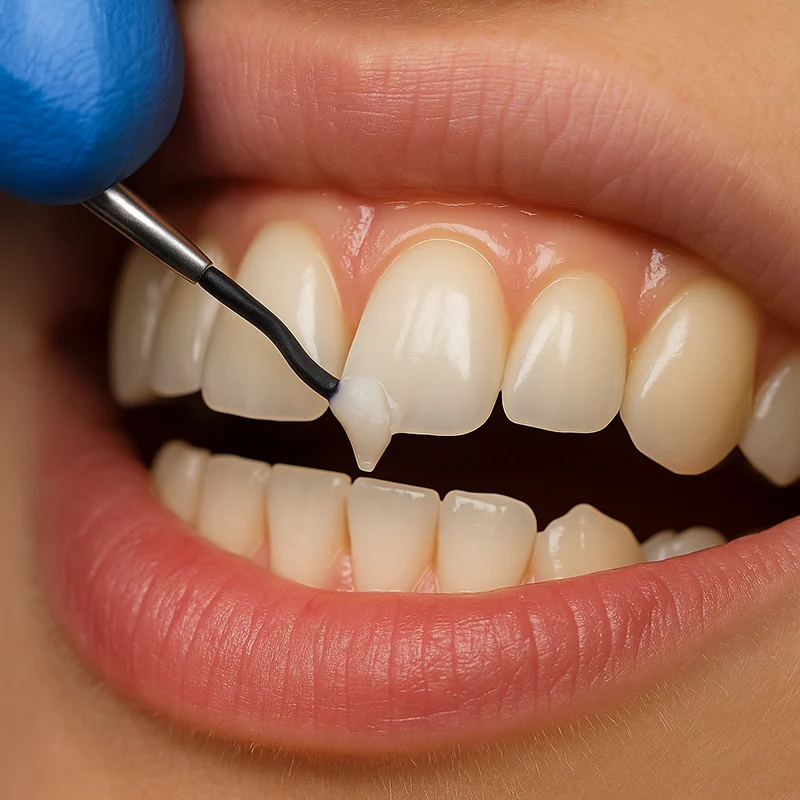
Composite bonding is a single-visit cosmetic dental treatment where a tooth-colored resin is sculpted directly onto the tooth to fix chips, gaps, discoloration, and uneven edges—typically requiring no drilling and no anesthesia.
Key takeaways
- Minimally invasive: little to no enamel is removed, so the treatment is usually reversible.
- Completed in one appointment — most front-teeth cases take 30–60 minutes per tooth.
- Best for small cosmetic corrections: gaps, chips, worn edges and stubborn discolouration.
- Not a substitute for braces or aligners — it doesn’t move teeth.
- More affordable and less durable than porcelain veneers.
What Is Composite Bonding?
Composite bonding is a procedure in which a tooth-coloured composite resin is applied directly to the tooth surface to restore or improve its appearance. It can naturally correct the shape, size or colour of a tooth, as well as minor cracks, chips and gaps.
The goal is to preserve as much natural tooth structure as possible. In most cases no significant drilling is needed — only minimal surface preparation, if any. It is most often used on the front teeth and is usually completed in a single session, making it a fast, effective option for stains that whitening can’t remove or for closing small gaps between teeth.
When Is Composite Bonding Used?
Composite bonding improves the look of a smile without altering the natural position of the teeth. It is commonly used for:
- Closing gaps between teeth (diastema)
- Repairing minor cracks or chips
- Covering permanent discolouration that whitening can’t fix
- Reshaping the corners or edges of teeth
- Lengthening worn or short teeth for a more even smile
Composite bonding is not an alternative to orthodontic treatment and does not change the position of teeth. It can, however, cosmetically improve mild shape irregularities.
How Is Composite Bonding Done?
The procedure usually follows six steps:
- Consultation and planning. The dentist examines your teeth, decides which need treatment, and discusses your expectations and the realistic outcome.
- Shade selection. A composite shade is matched to your natural teeth. Several shades are sometimes layered for a more lifelike result.
- Tooth surface preparation. If needed, the surface is lightly roughened so the resin adheres better. In most cases this requires no significant drilling, is painless, and needs no anaesthesia.
- Applying the bonding agent. After cleaning, a special bonding agent is applied so the composite attaches firmly to the tooth.
- Applying the composite resin. The composite is layered onto the tooth. Each layer is shaped and then hardened (cured) with a curing light, repeated until the desired natural shape is achieved.
- Shaping and polishing. The surface is refined, the edges are smoothed, and the tooth is polished to a natural, glossy finish.
How long does the appointment take? For a single tooth, treatment usually takes about 30–60 minutes. Treating several teeth takes proportionally longer, but a full front-smile makeover is often still completed in one visit.
How Long Does Composite Bonding Last?
The lifespan of composite bonding depends on your oral care and daily habits. On average it lasts 4–8 years. With good care, regular check-ups and premium materials, it can last up to 10 years. Composite is more prone to staining and wear than porcelain, so habits like smoking and frequent coffee or tea can shorten its life.
Composite Bonding vs Porcelain Veneers
Patients often weigh composite bonding against porcelain veneers. Here’s how they compare:
| Composite Bonding | Porcelain Veneers | |
|---|---|---|
| Treatment time | One Day | Approx. 5–7 days |
| Tooth preparation | Minimal or none | More extensive |
| Durability | 4–8 years | 10–15 years |
| Cost | More affordable | Higher |
| Reversibility | Usually reversible | Permanent |
| Best for | Small corrections | Full smile transformations |
In short: composite bonding is the faster, cheaper, more conservative choice for minor corrections, while veneers are the longer-lasting option for a complete smile redesign.
See also: Porcelain (E-Max) Laminate Veneers in Turkey
Advantages of Composite Bonding
- Preserves natural tooth structure — minimal or no preparation
- Completed in a single visit
- No separate lab work required
- More affordable than porcelain veneers or crowns
- Visible improvement immediately after treatment
- Can be repaired or reversed if needed
Limitations of Composite Bonding
- Less durable than porcelain
- May wear down or discolour over time
- Hard foods, nail biting and pen chewing can shorten its lifespan
- Teeth grinding (bruxism) increases the risk of chipping
- Coffee, tea and smoking can cause staining
Aftercare: How to Make Composite Bonding Last
- Avoid coffee, tea, red wine and smoking for the first 48 hours
- Don’t bite hard foods directly with bonded teeth
- Break habits like nail biting or pen chewing
- Brush twice daily and floss regularly
- Wear a night guard if you grind your teeth
- Visit your dentist every 6 months for a check-up and polish
Why Consider Composite Bonding in Istanbul?
Istanbul is one of the world’s leading destinations for cosmetic dentistry, combining accredited clinics, experienced English-speaking dentists and prices well below those in the UK, Europe and Australia. Most composite bonding cases are completed in a single 1–2 day visit, so international patients can fly in, have treatment and fly home with a finished smile. Bonding is also often combined with teeth whitening or a full smile design for a complete makeover.
Trust matters most in dental tourism. Omer Istanbul is ISO 9001:2015 certified and was named Turkey’s Best Cosmetic Dental Center, treating tens of thousands of international patients each year. Before you book anywhere, verify: the clinic’s Ministry of Health licence, the dentist’s Turkish Dental Association (TDB) registration, the specific composite brand used, and the written warranty terms.
Frequently Asked Questions
Is composite bonding painful?
No. In most cases there is little to no drilling and no anaesthesia is needed, so the procedure is painless.
How many teeth can be bonded in one visit?
A full front-smile makeover of 6–8 teeth is commonly completed in a single appointment.
Does composite bonding damage your natural teeth?
No. Little to no enamel is removed, which is why the treatment is usually reversible — one of its main advantages over veneers.
How long does composite bonding last?
On average 4–8 years, and up to 10 years with premium materials and good oral care.
Is composite bonding cheaper than veneers?
Yes. It is significantly more affordable than porcelain veneers, though veneers last longer.
Can composite bonding close gaps between teeth?
Yes. Closing small gaps (diastema) is one of the most common uses of composite bonding.
Learn More About Composite Bonding
Composite bonding is a quick, conservative and effective way to make small aesthetic corrections while keeping your natural teeth intact. With proper planning and care, you can enjoy a healthy, beautiful smile for years.
To find out whether composite bonding is right for you, book a free online consultation — send us a few photos of your teeth and our dental team will give you a personalised assessment and quote.