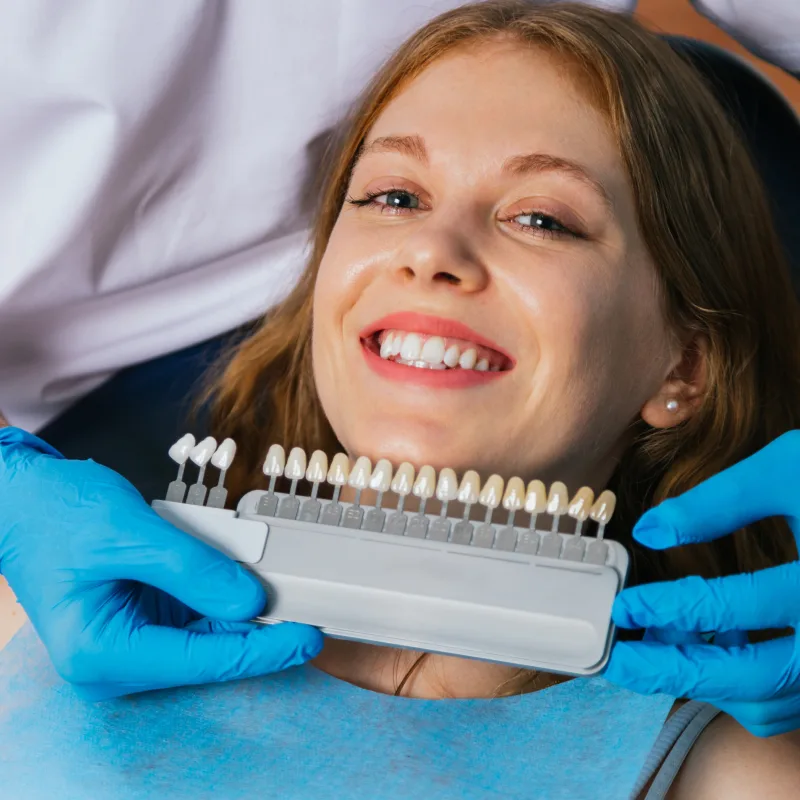
One of the most preferred treatments in aesthetic dentistry, laminate veneers provide an aesthetic smile by preserving the natural tooth structure at the highest possible rate. However, many people considering laminate veneers have the same question: “How much of the tooth is abraded?”
The prep (preparation) process used in laminate applications—the preparation of the tooth surface—is quite minimal compared to classic crowning methods. Therefore, laminate veneers are considered a modern treatment method that provides aesthetic results without damaging the tooth structure.
In this article, we will discuss in detail what the prep process is in laminate teeth, how much abrasion is done, how much the teeth are protected, and whether no-prep laminates are possible.
What is a Laminate Tooth?
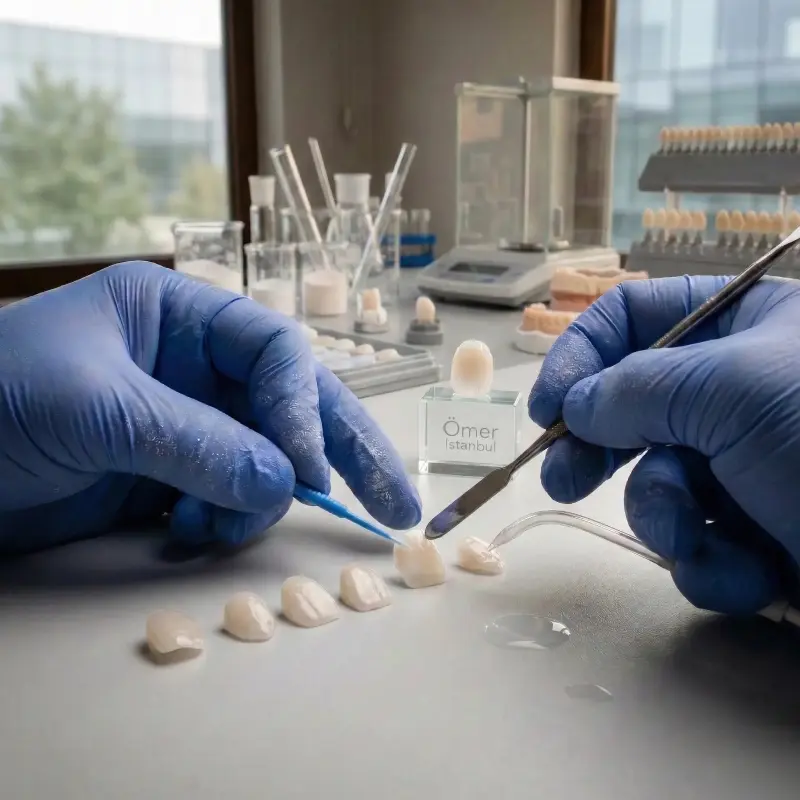
A laminate tooth (laminate veneer) consists of very thin porcelain leaf coatings applied to the front surfaces of the teeth. These veneers are usually 0.3 mm to 0.7 mm thick and are fixed to the front surface of the tooth with special adhesives.
Laminate teeth are especially preferred to correct the following aesthetic problems:
- Permanent discolorations on teeth
- Gaps between teeth (diastema)
- Small or short teeth
- Fractures or cracks in front teeth
- Mild crowding
- Deformities
The most important feature of laminate veneers is that they ensure the preservation of the natural tooth tissue to a great extent. Therefore, it is considered one of the most conservative methods among aesthetic dental treatments.
What is “Prep” (Abrasion) in Laminate Teeth?
Prep refers to the controlled preparation of the tooth surface before a veneer or restoration is made in dentistry.
During this process, a very thin layer of enamel is removed from the front surface of the tooth. The goal is to ensure that the veneer is positioned on the tooth in a natural and aesthetic way.
There are several important reasons for performing the prep process:
Creating Space for the Veneer
Even though laminate veneers are thin, they are a material added onto the tooth. If no abrasion is done, the veneer may make the tooth look bulky.
Ensuring a Natural Appearance
The tooth surface must be prepared so that the veneer looks natural at the gum line.
Increasing the Durability of the Veneer
A prepared surface allows the veneer to bond more strongly to the tooth.
Providing Aesthetic Control
Thanks to the prep process, the dentist can better control the thickness of the veneer and the shape of the tooth.
How Much Abrasion is Done in Laminate Teeth?
One of the biggest advantages of laminate veneers is that they require minimal abrasion.
The amount of abrasion usually performed is: between 0.3 mm – 0.7 mm.
This value means that only a small part of the tooth enamel is removed. In most cases, the abrasion remains only in the enamel layer and does not reach the dentin layer.
To make a comparison:
| Veneer Type | Average Abrasion |
|---|---|
| Laminate Veneer | 0.3 – 0.7 mm |
| Zirconium Crown | 1 – 2 mm |
| Metal-Supported Crown | 1.5 – 2 mm |
Therefore, laminate veneers are one of the aesthetic coating types that protect the natural tooth tissue the most.
In Which Part of the Tooth is the Prep Process Performed?
Laminate tooth preparation is usually performed only on the front surface of the tooth.
The areas where abrasion is done are:
- Front surface of the tooth
- Incisal edge (in some cases)
- Side contact points (minimal)
The back surface or the majority of the tooth is usually not cut at all. This ensures the structural durability of the tooth is maintained.
Is No-Prep Veneer Possible?
In some cases, laminate veneers can be applied without any abrasion of the tooth surface. This method is called No-Prep Veneer or non-abrasive laminate.
However, this method is not suitable for every patient. It is generally preferred in the following situations:
- Small teeth
- Teeth positioned inwards
- Presence of gaps between teeth
- Cases where the veneer will not create extra thickness
If the teeth are already normal-sized or positioned forward, applying no-prep veneers can cause the teeth to look artificial and thick. Therefore, a dentist’s examination is essential for correct treatment planning.
How is the Laminate Prep Process Done?
In laminate tooth treatment, the prep process is usually carried out in the following stages:
1. Clinical Examination and Planning
In the first stage, the dentist examines the condition of the teeth. If necessary, digital smile design can be performed.
2. Minimal Abrasion
A very thin enamel layer is removed from the front surfaces of the teeth. This process is usually painless and can be done under local anesthesia.
3. Impression Taking
Impressions of the prepared teeth are taken and sent to the laboratory.
4. Temporary Veneer
In some cases, temporary veneers may be applied to protect the patient’s aesthetic appearance.
5. Bonding the Laminate Veneer
The porcelain laminates prepared in the laboratory are fixed to the tooth with special adhesives.
How Well Do Laminate Veneers Protect Teeth?
Laminate teeth are considered a protective aesthetic treatment. This is because:
- Minimal abrasion is performed
- Most of the tooth is preserved
- A large part of the enamel layer remains
- The tooth nerve is not interfered with
Therefore, in a properly planned laminate treatment, more than 80-90% of the teeth are protected.
What is the Lifespan of Laminate Teeth?
With proper oral care, laminate veneers can be used for a very long time. The average duration of use is: 10 – 15 years. In some patients, this period can extend up to 20 years.
To extend the life of the veneers:
- Use a night guard if there is teeth grinding
- Do not break hard foods with your teeth
- Go for regular dental check-ups
- Maintain good oral hygiene
Advantages of Laminate Teeth
Laminate veneers offer many advantages in aesthetic dentistry:
Minimal tooth cutting: Natural tooth tissue is preserved to a great extent.
Natural appearance: Porcelain material reflects light like a natural tooth.
Color stability: Porcelain veneers do not change color over time.
Gum compatibility: When applied correctly, it provides perfect harmony with the gums.
Long-lasting use: It can be used for years with proper care.
Frequently Asked Questions
Is the tooth completely cut when getting laminate veneers?
No, the tooth is not completely cut in laminate veneer applications. One of the most important advantages of this treatment is the maximum preservation of natural tooth tissue. Since laminate veneers are very thin porcelain leaves, only a very thin abrasion between 0.3 mm and 0.7 mm is made from the front surface of the tooth. This usually takes place only in the enamel layer, and the internal structure or nerve of the tooth is not reached.
Do laminate veneers weaken the teeth?
Correctly applied laminate veneers do not weaken the teeth. On the contrary, since minimal abrasion is done, the tooth tissue is preserved to a great extent. Because the veneers are fixed to the tooth surface with special adhesives, they integrate with the tooth and cover the front surface like a protective layer.
Is there sensitivity after laminate veneer application?
Some patients may experience short-term hot and cold sensitivity after laminate tooth application. This is due to the minimal abrasion process performed on the tooth surface. However, this sensitivity is usually temporary and subsides spontaneously within a few days to a few weeks.
Can laminate veneers break?
Although they are thin, laminate veneers are produced from highly durable porcelain materials. Under normal usage conditions, breaking is rare. However, breaking hard foods with the teeth, using teeth as a tool (like a bottle opener), or being exposed to strong impacts can damage the veneers.
Can laminate veneers be removed?
Laminate veneers are fixed to the tooth surface with very strong adhesive systems and are considered permanent restorations. However, when the veneer needs to be replaced over time, a dentist can safely remove the existing laminates using special tools without damaging the tooth tissue.