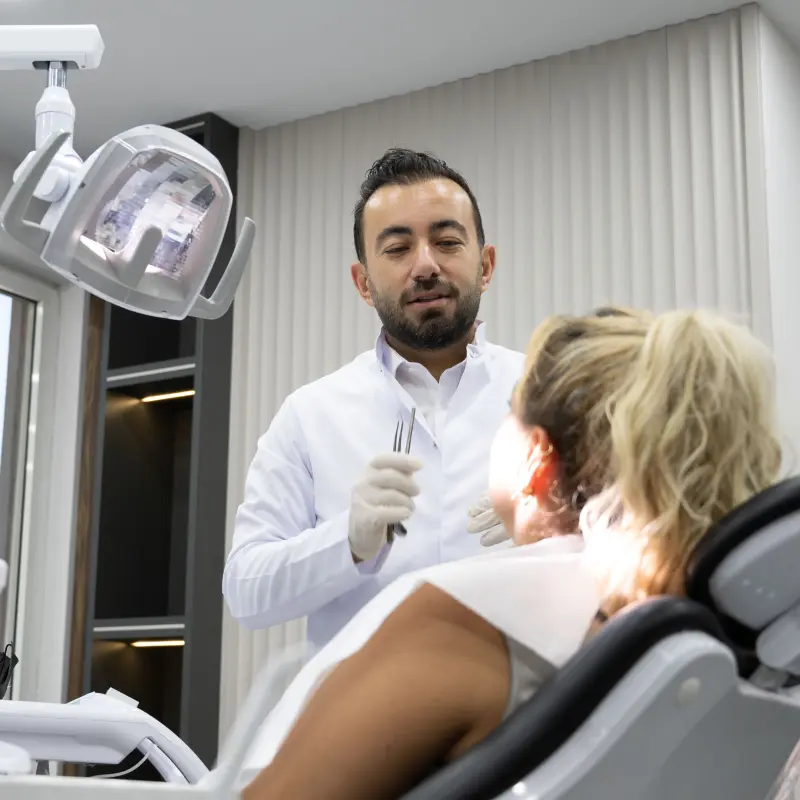
Digital Smile Design is a process where an ideal, personalized smile is planned by analyzing factors such as the patient’s facial features, lip structure, gum form, and tooth alignment using digital software.
The biggest difference from traditional methods is that you can see the results of the treatment in a digital environment or through intraoral temporary models called “mock-ups” before a single procedure is even performed. It is like an “architectural project” that completely eliminates the fear of “I wonder how it will look?”
How is Digital Smile Design Performed?
Unlike classic dental aesthetic applications, digital smile design is a multi-stage, technology-supported process.
1. Photo and Video Analysis
The patient’s:
- Facial expressions
- Lip movements during smiling
- Harmony of the teeth with the face
are recorded using high-resolution photos and videos.
2. Digital Impression and Scanning
Exact measurements of the teeth are taken with intraoral digital scanners. This process:
- Reduces measurement errors
- Provides comfort for the patient
- Enables more precise planning
3. Digital Planning (DSD Software)
Through specialized software, the following are designed with millimetric precision:
- Tooth length
- Tooth color
- Tooth alignment
- Gum level
4. Mock-Up (Intraoral Trial)
The digital design is applied to the patient’s mouth using temporary materials. The patient can experience their new smile in real life.
5. Permanent Treatment
Based on the approved design, procedures such as zirconium crowns, laminate veneers, implants, or gum aesthetics are applied.
How Long Does a Smile Design Last?
While smile design treatment is durable, its lifespan depends on many factors. The individual’s oral hygiene routine and the quality of the products used during the treatment and maintenance phases extend the life of the smile design.
It can be said that a high-quality smile design, applied by an experienced dentist and supported by regular dental care, can last for many years. However, after some time, renewal or maintenance may be required due to wear and tear on materials, changes in tooth color, or other factors. Since this process varies from person to person, it may last a few years for some patients and decades for others.
Which Treatments Does It Include?
Digital smile design is not a treatment on its own, but a planning protocol. To bring the design to life, one or more of the following procedures may be applied:
- Porcelain Laminate (Veneers): Thin aesthetic layers applied only to the front surface of the teeth.
- Zirconium Crowns: Crowns that are both durable and have natural light transmittance.
- Gingivectomy (Pink Aesthetics): Correcting the gum level with a laser.
- Teeth Whitening (Bleaching): Lightening the color tone for a brighter smile.
- Implant Treatment: Completing missing teeth.
Advantages of Digital Smile Design
Why should you choose digital design instead of traditional methods?
- No Surprises: You know from the very beginning what kind of result you will encounter at the end of the treatment.
- Personalization: A design is made specifically for you, in harmony with your face, using “Golden Ratio” rules.
- Active Participation: During the design phase, you can make decisions about the length or shape of your teeth together with your dentist.
- Minimum Error Margin: Manual measurement errors are prevented thanks to digital impression and 3D scanning methods.
Did you know? In digital smile design, not only your teeth but also your character, age, and gender are part of the design. For example, teeth with sharper lines provide a more masculine vibe, while more rounded forms provide a feminine and energetic appearance.
Who is it Suitable For?
- Those who are not satisfied with the color and shape of their teeth,
- Those with gaps (diastema) between their teeth,
- Those whose gums are too visible when smiling (Gummy Smile),
- Those with broken, worn, or crowded tooth structures,
- Anyone who wants a younger and more dynamic facial expression.
Why Should Digital Smile Design Be Preferred?
Because this method:
- Relies on scientific and digital data, not guesswork.
- Clarifies patient expectations.
- Increases aesthetic and functional success.
Conclusion
Digital smile design is one of the most advanced aesthetic solutions offered by modern dentistry. It offers great advantages from aesthetic, functional, and psychological perspectives. If you are not satisfied with your smile, you can take a step closer to your dream smile with digital smile design.
Frequently Asked Questions
Does digital smile design hurt?
No. Digital smile design is completely painless during the planning phase. During the application phase, local anesthesia is applied depending on the procedures performed, and the patient does not feel any pain.
How many days does digital smile design take to complete?
Although the treatment period varies depending on the procedures to be applied, it is generally completed within 5 to 14 days. Digital planning and mock-up procedures alone can be done within a few days.
Is digital smile design permanent?
Yes. When high-quality materials such as zirconium crowns, laminate veneers, or porcelain are used, digital smile design is a long-lasting and permanent solution. It can be used for 10–15 years or more with regular oral care.
Does digital smile design look natural?
Absolutely yes. Thanks to digital analysis, teeth are designed to be compatible with the face shape, lip structure, and gum level. This ensures a natural, subtle, and aesthetic smile.
Can digital smile design be applied to everyone?
Almost anyone with suitable general oral and dental health can have a digital smile design. However, if there are problems such as gum disease or cavities, these issues must be treated first.