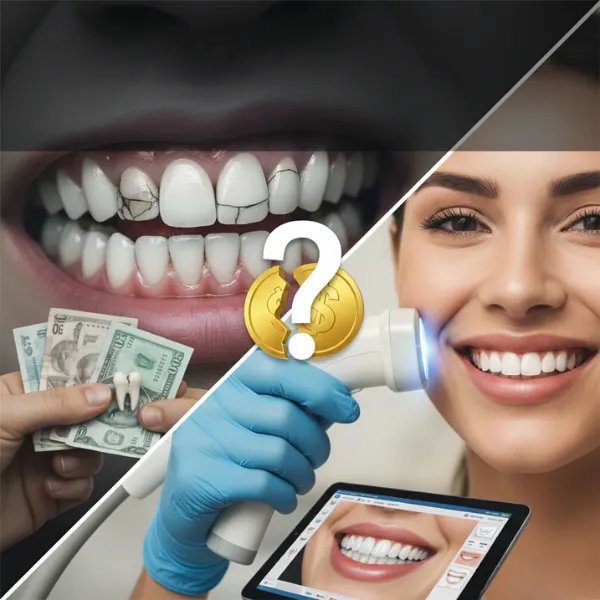
When seeking dental treatment, many patients prioritize price research. Searches like “cheap dental treatment,” “most affordable dental clinic,” or “economical implants” are incredibly common online. However, in dentistry, a low price often carries significant risks regarding quality, durability, and patient safety.
A seemingly cheap dental treatment can result in costs several times higher than the initial fee when it fails prematurely, causes infection, or requires replacement. Therefore, the real question is:
Is cheap dental treatment truly economical, or does it cost more in the long run due to hidden expenses?
In this article, we will examine why cheap dental treatment is more costly over time from scientific, technical, and practical perspectives.
Key Elements Determining the Cost of Dental Treatment
The price of a treatment is not solely determined by the dentist’s fee. Several factors contribute to the total cost:
1. Quality of Materials Used
- Filling materials
- Crown and bridge frameworks
- Adhesive cements
- Implant brands
High-quality materials hold international certifications and have passed biocompatibility tests. In contrast, low-quality products carry high risks of:
- Faster wear and tear
- Discoloration
- Risk of breakage
- Potential for allergic reactions
2. Education and Experience of the Dentist
Procedures performed by a specialist with years of clinical experience will yield different results than those performed by an inexperienced practitioner.
3. Clinical Equipment
Technologies such as digital X-rays, tomography, CAD/CAM systems, and laser devices significantly increase the success rate of treatments.
Each of these elements affects the cost and directly determines the quality of care.
The Biggest Risk of Cheap Dental Treatment: Short Lifespan
Procedures performed with poor materials and faulty application usually do not last long.
Example:
Cheap filling → Fails within 6 months – 1 year
Refilling → Additional cost
Decay underneath → Root canal treatment
Final stage → Crown/Cap
What started as a cheap filling eventually turns into the cost of a root canal + a crown.
Primary Problems Caused by Cheap Dental Treatment
1. Inadequate Sterilization
Failure to follow sterilization protocols creates serious health risks such as:
- Hepatitis B & C
- HIV
- Bacterial infections
The cost of treating such diseases can be dozens of times higher than a simple dental procedure.
2. Incorrect Diagnosis
Cheap clinics often skip panoramic X-rays, do not use tomography, and fail to perform detailed examinations. This leads to underlying issues being overlooked.
For example: A simple filling is placed → However, the nerve of the tooth is already dead. Pain starts shortly after → Root canal treatment becomes necessary.
3. Application Errors
- Poor isolation of the filling
- Incorrect measurement of the root canal length
- Crowns that do not fit the tooth perfectly
These errors lead to the ultimate failure of the treatment.
Why Are Cheap Implants Dangerous?
Implants are titanium screws placed into the jawbone. Low-quality implants have lower titanium purity, poor surface coating, and often fail to fuse with the bone (osseointegration).
The result: The implant falls out → Bone loss occurs → Bone grafting is required for a new implant. This process is a waste of both time and money.
The Financial Cost of Aesthetic Failures
Cheap crowns and prosthetics change color over time, cause gum recession, and lose their natural appearance. Patients often become unhappy with their appearance and want the treatment redone, resulting in a second high expense.
Psychological and Social Costs
Poor dental work can lead to embarrassment when smiling, avoidance of social settings, and a loss of self-confidence.
Why Quality Dental Treatment Is More Economical
- It is long-lasting
- It does not require frequent repetition
- The risk of complications is low
- Total lifetime cost is lower
In short, even if it seems expensive initially, it is cheaper in the long run.
Difference Between Cheap and Quality Treatment
| Feature | Cheap Treatment | Quality Treatment |
|---|---|---|
| Material | Low quality | Certified, premium |
| Durability | Short-term | Long-lasting |
| Aesthetics | Poor | Natural appearance |
| Warranty | None | Available |
| Long-term Cost | High | Low |
What Should You Consider When Choosing Dental Treatment?
- The dentist’s credentials and experience
- Brands of materials used
- Clinical hygiene conditions
- Whether the treatment plan is provided in writing
- Whether a warranty is offered
Choose What Is Right, Not What Is Cheap
Dental treatment is not an expense; it is an investment in your health. While cheap dental treatment may seem attractive in the short term, it results in more expenses, time loss, and health risks in the long term.
True savings are only possible through quality and correctly performed treatment.
Frequently Asked Questions
Is it safe to have cheap dental treatment?
It is not correct to say cheap treatment is always unsafe; however, clinics offering prices significantly below the market average often compromise on material quality, sterilization standards, and practitioner experience.
Why do prices vary so much in dental treatments?
Prices vary based on the brand of materials used, the dentist’s expertise, the clinic’s technological infrastructure, and the complexity of the case.
What problems can I face with a cheap filling?
Materials used in cheap fillings can wear down quickly, discolor, or leak. This leakage can lead to deeper decay and the need for root canal treatment.
Is getting a cheap implant risky?
Yes. Low-quality implants may fail to bond with the bone, leading to implant loss and jawbone erosion, which significantly increases future costs.