Most people know the night guard only as a protector worn against teeth grinding. But this small appliance does much more than you might think.
If you clench or grind your teeth while sleeping, your dentist has likely recommended a night guard. Many see it as just a tooth protector and tuck it away in a drawer. However, those who use it regularly notice over time: morning headaches decrease, neck tension fades, and sleep becomes deeper.
In this article, we explain the little-known benefits of night guards, who should use them, and how to care for them in simple language.
What is a Night Guard and How Does It Work?
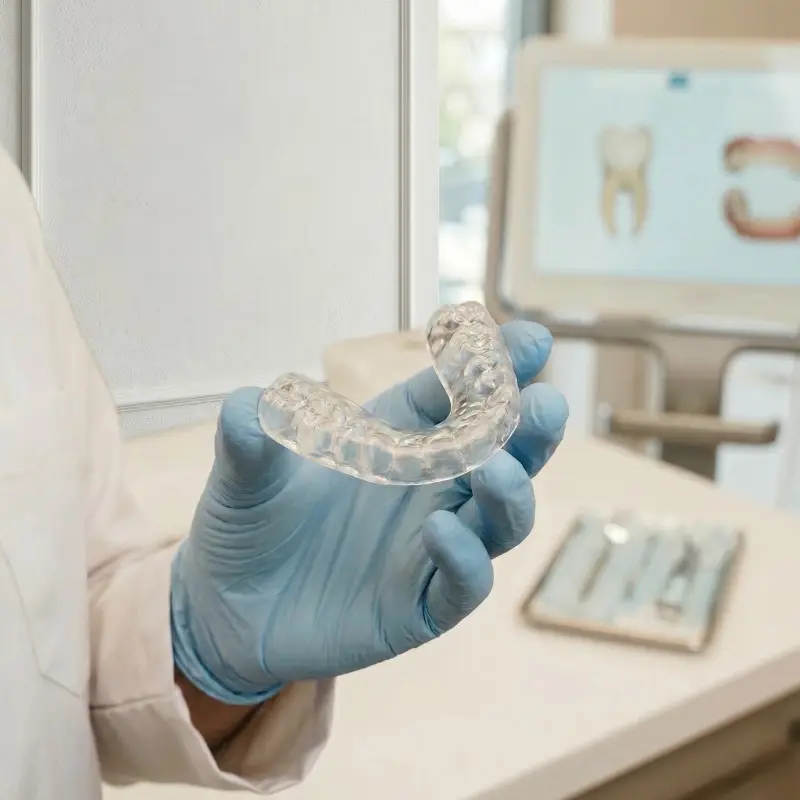
A night guard is a transparent appliance custom-made to fit your teeth perfectly. It is usually produced from hard or semi-soft plastic. When worn, it prevents your upper and lower teeth from touching each other.
But its primary function is not that simple. Your jaw muscles contract unconsciously throughout the night, generating immense force. The night guard cushions this contraction, preventing your muscles from working at full power. You can think of it as a seatbelt for your jaw muscles.
“A night guard protects not only the teeth but also the jaw muscles, forcing them to rest.”
The Effects of Teeth Clenching on the Body
Teeth clenching and grinding (bruxism) occurs in about ten percent of adults. Most people don’t even realize it; they simply wake up with a painful jaw or feeling fatigued.
During sleep, your jaw muscles can apply up to 10 times the force generated while eating. Over time, this situation leads to the following problems:
- Wearing of tooth surfaces: Teeth gradually thin, become sensitive, and start to break.
- Gum recession: The tooth root becomes exposed, increasing sensitivity to hot and cold.
- Jaw joint issues: The jaw joint wears down; clicking sounds occur when opening the mouth, pain develops, and sometimes the jaw can lock.
- Morning head and neck aches: Jaw muscles that remain contracted all night cause pain in the morning.
7 Little-Known Benefits of Night Guards
1. Reduces Jaw Pain
Problems in the jaw joint can manifest as jaw pain, headaches, tinnitus (ringing in the ears), and difficulty opening the mouth. A night guard alleviates these complaints by resting the jaw joint and reducing the load on it. Many patients who use it regularly report significant relief within a few weeks.
2. Relieves Morning Headaches
If you wake up with a throbbing headache, the cause might not be stress or sleep disorders. Jaw and temple muscles that contract overnight are one of the most common but least known causes of these headaches. Night guards can significantly reduce morning headaches by preventing these muscles from overworking.
3. Helps You Sleep Better
It may sound surprising, but a night guard can improve your sleep quality. When muscles remain contracted throughout the night, the brain cannot enter deep sleep and stays in a constant light sleep state. Once the muscles relax, sleep cycles normalize. The vast majority of regular users say they feel more refreshed in the morning after a few weeks.
4. Alleviates Neck and Shoulder Pain
Jaw muscles are directly connected to neck and shoulder muscles. Tension in the jaw affects these muscles as well, leading to stiff necks and shoulder pain. A night guard cuts this chain reaction of tension at the source. Especially for those with chronic neck pain, a dental check-up is a frequently overlooked but highly effective step.
5. Protects Your Fillings, Crowns, and Implants
If you have invested in dental treatments—fillings, crowns, bridges, or implants—it is vital to protect that investment. Excessive force applied overnight can damage these treatments, causing them to break or become dislodged. Thanks to its protective function, a night guard significantly extends the life of these treatments.
6. May Reduce Tinnitus (Ringing in the Ears)
The jaw joint is located very close to the ear. Therefore, issues in the joint can trigger tinnitus. In some patients, the use of a night guard has noticeably reduced ear ringing. This effect is not seen in everyone, but if you have unexplained tinnitus, it is worth consulting your dentist.
7. Prevents Much Larger Future Expenses
A night guard is not an expense; it is a saving. Not using one now can lead to the need for fillings, crowns, root canals, or even implant costs in the future. Taking early precautions protects both your teeth and your wallet.
Who Should Use a Night Guard?
| Symptom or Condition | What to Do? |
|---|---|
| Jaw pain or fatigue in the mornings | Definitely see a dentist |
| Wear or sensitivity in teeth | Definitely see a dentist |
| Clicking sounds or pain when opening the jaw | Definitely see a dentist |
| Chronic morning headaches | Evaluate with a dentist |
| If you recently had implants or crowns | Definitely see a dentist |
| Unexplained tinnitus (ear ringing) | Evaluate with a dentist |
| A very stressful lifestyle | Can be considered as a precaution |
Important Warning: You should obtain your night guard from your dentist. Over-the-counter guards sold in pharmacies do not fit your mouth perfectly and may cause your jaw to remain in the wrong position. This can worsen your existing complaints.
Types of Night Guards: Which One is Right for You?
- Hard Guard: The most preferred type supported by research. It is used for jaw joint problems and severe teeth clenching. It is durable and can be adjusted by the dentist.
- Soft Guard: Easier to get used to wearing. Preferred for mild clenching cases and in children. However, it may cause some people to clench their jaw even more.
- Dual-Laminate (Soft inside, hard outside): Combines the best features of both types. It is both comfortable and protective.
- Partial Guard (Front teeth only): Fits only over the front teeth. It is a type also used in migraine treatment; however, it should be used carefully as long-term use can change your bite.
- Full Arch Guard: Covers all teeth and keeps the jaw in a natural position. Widely used in the treatment of jaw joint issues.
Proper Use and Maintenance Guide
To get the best performance from your night guard, follow these rules:
- Clean it every morning: Brush it with a soft toothbrush and liquid soap. Do not use toothpaste; it can scratch the guard and increase bacterial buildup.
- Deep clean once a week: Add a teaspoon of baking soda to lukewarm water and soak the guard for 15 minutes. This prevents yellowing and odors.
- Store correctly: Place it in its ventilated case after it has dried completely. Do not place it near hot water or in direct sunlight; its shape may warp.
- Get it checked every 6 months: The guard wears down over time or may stop fitting perfectly due to changes in your mouth. Your dentist will tell you if it needs to be replaced.
Frequently Asked Questions
I can’t sleep while wearing the night guard, what should I do?
Feeling strange in the first few weeks is completely normal. Start by wearing it for just 1–2 hours before sleeping, and extend it a bit more each night. Usually, you will get used to it within 2–3 weeks. If discomfort persists after this period, tell your dentist; the thickness or type of the guard can be adjusted.
Does a night guard cure teeth clenching?
No. A night guard does not eliminate the cause of teeth clenching; it prevents its damages. Teeth clenching is often rooted in stress, sleep issues, or problems with how teeth fit together. These may require separate treatment.
How long should I use it?
This varies from person to person. Some may stop using it after a few months when their complaints subside. Those with chronic clenching problems may need to use it for many years or even a lifetime. Your dentist will give you the most accurate advice based on your condition.
Does a night guard cause weight gain?
No. A night guard is only worn while sleeping and removed while eating. It has no connection to the digestive system.
Can children use night guards?
In children with baby teeth, a “wait-and-see” approach is usually preferred because most children stop clenching as they grow. If the problem persists after permanent teeth have erupted, the dentist may recommend a soft guard.
Night Guard Protection
A night guard is a much more functional tool than you might think. It doesn’t just protect your teeth; it reduces your morning headaches, helps you sleep better, alleviates neck and jaw pain, and saves you from massive dental treatment costs in the coming years.
If you are experiencing any of the symptoms mentioned in this article, we recommend speaking with a dentist. A small precaution can make a huge contribution to both your health and your budget in the long run.
This content is for general information purposes. Always consult your dentist for personal health decisions.