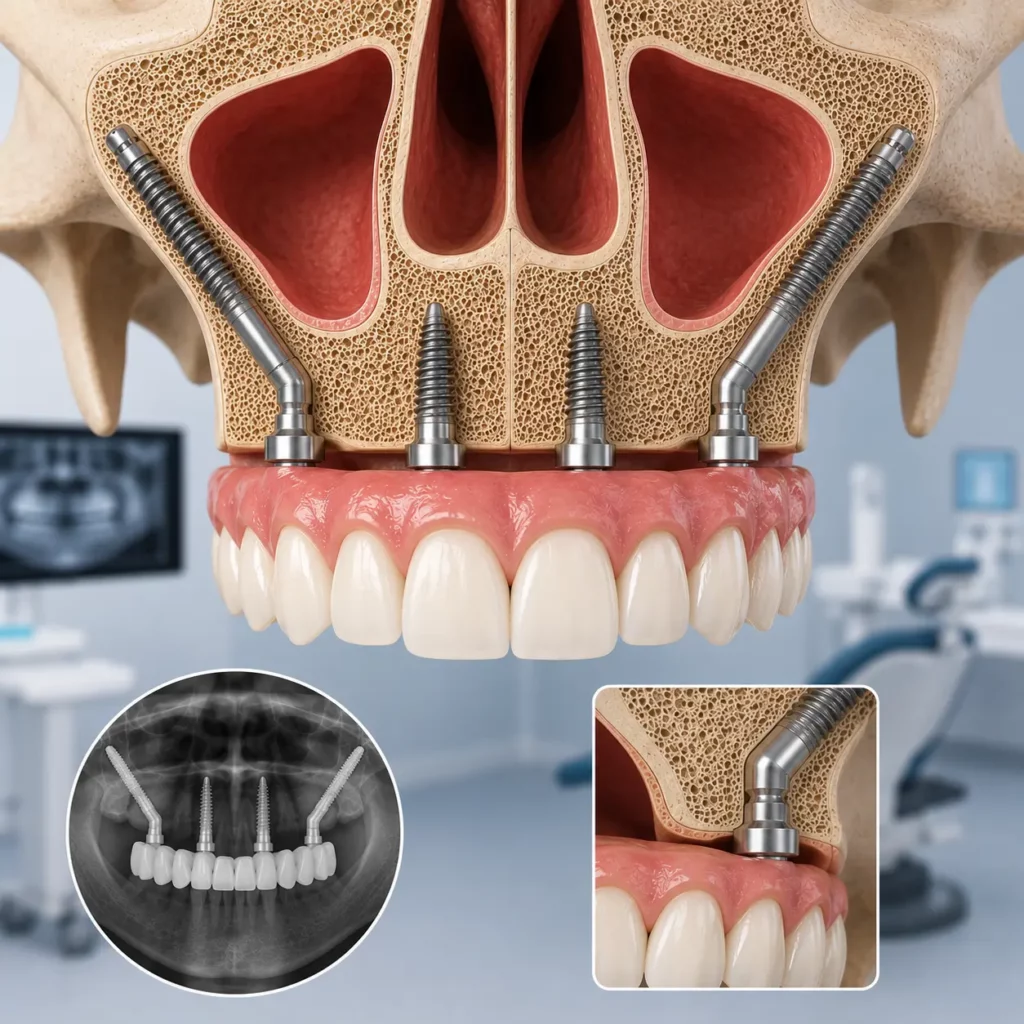
Dental implant treatments have become much more comfortable and successful in recent years thanks to developing technologies. Especially the use of laser technology in implant treatments both increases patient comfort and accelerates the treatment process. Laser-assisted dental implants are a modern treatment method that provides more precision, less trauma, and faster recovery compared to traditional implant applications.
In this article, we will examine in detail what laser-assisted dental implants are, how they are applied, their advantages, and who they are suitable for.
What is a Laser-Assisted Dental Implant?
A laser-assisted dental implant is a modern surgical method where laser technology is used during the implant application. In this method, laser devices are used in stages such as opening the gum tissue, clearing bacteria, and preparing the implant site.

Using a laser instead of the surgical scalpels used in traditional methods ensures the procedure is performed with greater precision and control. Additionally, thanks to laser technology, there is less bleeding during the procedure and the healing process is accelerated.
Laser-assisted implant treatment is frequently preferred especially for:
- Patients with gum sensitivity
- Situations where bleeding risk needs to be reduced
- Individuals who want a more comfortable surgical process
Key Differences: Traditional vs. Laser-Assisted
| Feature | Traditional Implant | Laser-Assisted Implant |
| Surgical Tool | Scalpel and Sutures | Laser Beam |
| Pain and Swelling | More Pronounced | Minimal |
| Recovery Time | 7-10 Days (Wound closure) | 2-3 Days |
| Infection Risk | Standard | Very Low (Provides sterilization) |
| Bleeding | Expected | Almost none |
How Does the Application Process Work?
The laser-assisted implant procedure consists of several stages. The treatment plan is specially prepared according to the patient’s oral structure and bone condition.
1. Examination and Planning
In the first stage of treatment, a detailed oral examination is performed by the dentist. Usually, 3D dental tomography is used to examine the structure of the jawbone. This allows the implant site to be determined in the most accurate way.
2. Gum Preparation with Laser
The gum is opened using a laser instead of traditional surgical incisions. The most important advantage of the laser is that it works very precisely and causes minimum bleeding.
3. Placement of the Implant
Titanium implant screws are placed into the prepared jawbone. These implants act as natural tooth roots.
4. Healing Process (Osseointegration)
The implant must fuse with the jawbone. This process is called osseointegration and is usually completed within 2–4 months.
5. Placement of the Prosthetic Tooth
After healing is complete, an abutment and a porcelain or zirconium tooth are placed on top of the implant. This results in a natural-looking and functional tooth.
Advantages of Laser-Assisted Implants
Why should you choose this method? Here are the critical benefits:
- Suture-free and Bloodless Operation: Because the laser cauterizes blood vessels while cutting the tissue, there is almost no bleeding. In most cases, stitches are not required.
- Maximum Sterilization: Laser beams instantly destroy bacteria in the operation area. This significantly reduces the risk of post-operative infection (peri-implantitis).
- Less Trauma, Faster Healing: Since surrounding tissues are not damaged, swelling and bruising after the procedure are at a minimum level. Patients can usually return to their social lives the next day.
- Precision: The laser allows for a much more precise preparation of the implant socket, which increases the success of osseointegration (fusing with the bone).
Who is it Suitable For?
Laser-assisted implants can be applied to almost any patient. However, they offer great advantages especially for the following groups:
- Those with dental phobia: It offers a more peaceful experience as there is no sound of scalpels or sutures.
- Those using blood thinners: The risk is reduced because bleeding control is easier with a laser.
- Diabetes patients: For individuals whose wound healing is slow, the biostimulation property of the laser (accelerating cell regeneration) supports healing.
Are Laser-Assisted Dental Implants Suitable for Everyone?
Laser technology may not penetrate every dental structure in the same way. In cases of extremely hard tooth tissue, the effect of laser energy may be limited. In such instances, traditional implant methods may need to be preferred.
Laser-Assisted Dental Implants in Turkey
Turkey is one of the world’s most popular destinations for aesthetic dentistry. Laser-assisted dental implant treatment is offered more affordably and comfortably in Turkey compared to other countries. Since the cost of laser-assisted implant treatment can vary depending on the patient’s condition, the number of implants, the brand, and the scope of treatment, exact cost information can only be provided after a preliminary examination.
The Future Smile is Possible Today
Laser-assisted dental implants are a technology-oriented and safe and permanent solution that makes the “dentist’s chair” fear a thing of the past. With the right physician and the right technology, you can smile healthily for a lifetime with your new teeth replacing your missing ones.
Frequently Asked Questions
Is the laser-assisted implant procedure painful?
No. Since the procedure is performed under local anesthesia, the patient does not feel pain during the process. Thanks to laser technology, post-operative pain and swelling are also generally minimal.
Is laser implant treatment better than traditional implants?
It can vary for every patient. However, laser-assisted implant applications are preferred by many patients because they generally offer less bleeding, faster healing, and a more comfortable surgical process.
Is laser-assisted implant suitable for everyone?
It is suitable for most patients. However, severe bone loss, uncontrolled diabetes, or certain systemic diseases can affect implant treatment. Therefore, a detailed dental examination is necessary.
How long do laser-assisted implants last?
As long as good oral care is maintained and regular dental check-ups are not neglected, implants can be used for 20 years or even a lifetime.