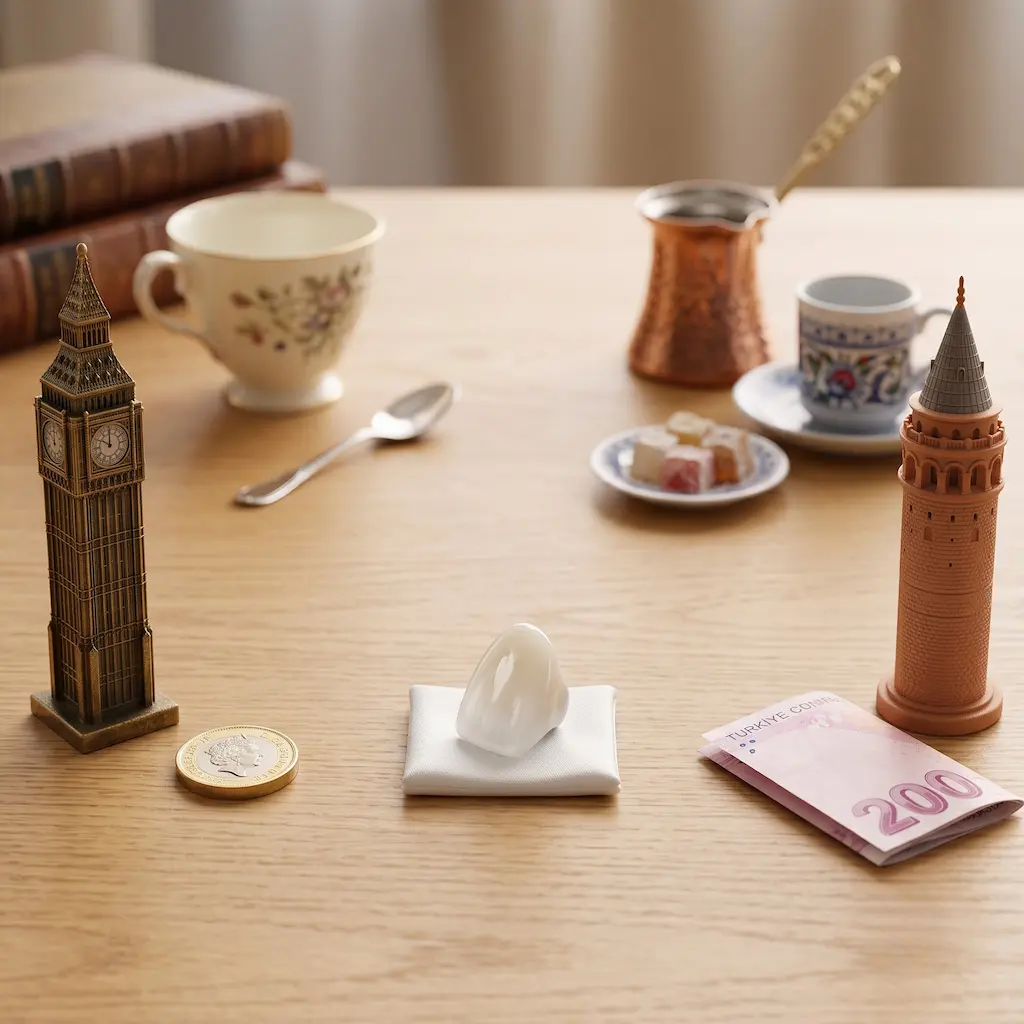
If you have already had a veneer consultation in the UK, you probably remember the exact moment the treatment coordinator turned the screen around. One porcelain veneers: somewherea between £2,500 and £5,000. Eight to ten: easily five figures in London. That moment — not the dental work itself — is why tens of thousands of British patients research veneers in Turkey every year.
That moment is also where most patients begin comparing options for a full smile makeover abroad. But most price comparison articles fail you in one of two ways. UK clinics publish “warning” pieces designed to keep you at home. Turkish clinics publish “from £150” headlines designed to get you on a plane. Neither tells you what you actually need: the full, honest arithmetic — including flights, hotels, what package prices really cover, and when travelling doesn’t make financial sense.
This guide does exactly that.
Veneer Prices in the UK in 2026: What You’ll Really Pay
Private UK pricing in 2026 breaks down roughly as follows:
| Treatment | Typical UK Price (per tooth) |
| Composite veneers | £600 – £1250 |
| Porcelain veneers | £2000 – £5,000 |
| E-max / premium porcelain | £1500 – £5,500+ |
| Six-veneer smile (“social six”) | £12,000 – £30,000 |
| Full smile (8–10 veneers) | £25,000 – £45,000+ |
Three details UK patients often discover only after committing:
Location inflates the price, not the quality. The same porcelain veneer that costs around £200 in Manchester can reach £1,200–£1,500 in central London. You are paying for Harley Street rent, not better ceramics.
Veneers are almost never available on the NHS. Unless a tooth is clinically damaged (trauma, for example), cosmetic veneers are a fully private treatment. NHS Band 3 (~£330) does not cover a smile makeover.
The headline fee is rarely the whole fee. Consultation, digital smile design, diagnostics, temporary veneers, and aftercare adjustments are frequently itemised separately in the UK, adding several hundred pounds before the first veneer is bonded.
Veneer Prices in Turkey in 2026
At an accredited Istanbul clinic, per-tooth pricing in 2026 typically looks like this:
| Treatment | Typical Turkey Price (per tooth) |
| Composite veneers | £150 – £250 |
| Porcelain laminate veneers | £250 – £290 |
| E-max (lithium disilicate) | £250 – £290 |
| Zirconia-based restorations | £150 – £200 |
| Full smile makeover (16–20 units) | £3,300 – £5,000 (package) |
Here is the part that matters more than the numbers: the material is often literally the same product. E-max is manufactured by Ivoclar Vivadent — a Liechtenstein company — whether the block is milled in a lab in Leeds or in Istanbul. Premium Turkish clinics use the same CAD/CAM systems (3Shape, CEREC) found in top European laboratories, and the same minimal-prep techniques described on our laminate dental veneers page. You are not buying a cheaper veneer. You are buying the same veneer in a cheaper economy.
Why Is There Such a Big Difference? (It’s Economics, Not Corners Cut)
Patients understandably ask the uncomfortable question: if it’s 70% cheaper, what am I giving up? The honest answer is: overhead, not quality.
Laboratory and operating costs. A dental laboratory in Turkey produces identical CAD/CAM work at a fraction of UK lab fees. Clinic rent in Istanbul is a small percentage of what an equivalent London practice pays. These savings pass directly into treatment pricing.
Case volume. A busy Istanbul cosmetic clinic completes more smile makeovers in a month than many UK practices complete in a year. Volume does two things: it lowers per-case material costs through bulk purchasing, and — more importantly for you — it means the clinical team designing your smile has done this specific procedure thousands of times.
Currency and national strategy. Turkey actively supports health tourism through the International Health Tourism Authorization system regulated by the Ministry of Health, and the exchange rate amplifies purchasing power for patients paying in pounds.
None of these three factors touches the ceramic bonded to your tooth.
The “Turkey Teeth” Question — Answered Honestly
You have seen the headlines. So let’s address them directly instead of pretending they don’t exist.
The cases British media labels “Turkey Teeth” almost always share the same pattern: healthy teeth aggressively ground down for bulky, opaque crowns — not true veneers — usually at clinics chosen purely on the lowest quote. That is a real risk, and it is a clinic selection problem, not a geography problem — we explained the mechanics of it in why “cheap” dental treatment actually ends up costing more. Poor cosmetic dentistry exists in every country; the UK’s own regulator disciplines dentists for the same failures.
A proper veneer removes only 0.3–0.5 mm of enamel — sometimes none at all with minimal-prep laminates. The distinction you should be checking is not “Turkey vs. UK.” It is:
- Does the clinic hold the Ministry of Health’s International Health Tourism Authorization Certificate?
- Will they tell you when a veneer is the wrong choice? (A dark, root-canal-treated tooth may genuinely need a dental crown; a mild alignment issue may be better solved without touching enamel at all.)
- Can you see before/after cases similar to your starting point — not just the most dramatic transformations? Browse our Smile Gallery with this filter in mind.
- Is there a written treatment plan and warranty before you fly?
At Omer Istanbul, every international patient receives a free remote assessment and a written, itemised treatment plan before booking anything — you can read exactly how it works in our guide to the consultation process in dental treatment. If your case doesn’t need 20 veneers, you will be told so — because reputation in this industry is built one honest treatment plan at a time.
When Travelling to Turkey Doesn’t Make Sense
An honest comparison has to include this section, and you will rarely find it on a clinic blog.
One or two veneers: the maths gets tight. Saving £2000–£3,000 on treatment while spending £400+ on travel and taking time off work may not justify the trip. For a single chipped front tooth, a good local composite solution is often the rational choice — our comparison of bonding vs. porcelain veneers explains when each makes sense.
Active gum disease or untreated decay: these must be resolved before any cosmetic work, anywhere. If a clinic — in any country — is willing to bond veneers over unhealthy foundations, walk away.
You want it done “over a weekend”: quality porcelain work needs 5–7 days for preparation, laboratory fabrication, try-in, and bonding. Anyone compressing that into 48 hours is compressing something you’ll pay for later.
The break-even point, in practice, sits at around four veneers. From four units upward, the savings comfortably absorb every travel cost — and from eight upward, the difference funds the entire trip several times over.
What a Transparent Turkish Package Should Include
When comparing quotes from Istanbul clinics, insist on written confirmation that the price covers:
- Full clinical examination, X-rays/CT imaging, and digital smile design
- Temporary veneers during fabrication
- All laboratory fees for the agreed material (ask for the material certificate of authenticity — genuine E-max blocks are traceable)
- Try-in appointment and shade/shape adjustments before final bonding (see our guide on how veneer color should be chosen)
- Hotel accommodation and VIP airport/clinic transfers
- A written warranty and a defined aftercare protocol for when you’re back home
If any of these appear as “extras” at the airport-pickup stage, you found the hidden cost that made the headline price possible.
Frequently Asked Questions
Are veneers in Turkey the same quality as in the UK?
At accredited clinics, yes — the ceramic materials (such as Ivoclar Vivadent E-max) and CAD/CAM systems are identical to those used in leading UK practices. The price difference reflects lower operating costs and higher case volume, not different materials.
How long do I need to stay in Istanbul for veneers?
Plan for 5–7 days: consultation and preparation on days 1–2, laboratory fabrication on days 3–5, and try-in plus final bonding on days 5–7. Many patients combine this with a holiday — see our 5-day dental treatment + vacation itinerary in Istanbul.
How long do veneers from Turkey last?
Lifespan depends on material and care, not geography: composite lasts around 5–7 years, porcelain 10–15 years, and E-max 15–20 years with good hygiene and a night guard if you grind your teeth. For a deeper look at longevity, read the real lifespan of cosmetic teeth.
Is it safe to get veneers in Turkey?
Yes — provided you choose a clinic holding the Turkish Ministry of Health’s International Health Tourism Authorization Certificate, with verifiable patient reviews, transparent written treatment plans, and a warranty. The publicised problem cases overwhelmingly trace back to price-only clinic selection — our guide on how to find the best dental clinic in Istanbul walks through the exact vetting checklist.
Can I pay for veneers in Turkey in pounds? Most international clinics quote and accept GBP, EUR, or USD, which protects you from exchange-rate movement between booking and treatment.
Get Your Exact Price — Not a Range
Every smile is different, which is why every honest price is a personalised one. Send us a few photos through our free consultation form and our clinical team will prepare an itemised treatment plan — material, number of units, timeline, and total cost — before you book a single flight.